







More Than Healthcare: The Importance and Practicality of Patient Advocacy
Navigating healthcare isn’t always straightforward, especially when life outside the exam room makes it even harder.
At Rocking Horse, Patient Advocacy exists to bridge that gap, offering real support for real challenges that impact health every day. In this conversation with De’Ja Durham, our Social Services Supervisor, we take a closer look at how Patient Advocates help individuals and families move forward with confidence and care.

For those who may not be familiar, what does patient advocacy mean in a healthcare setting like Rocking Horse?
De'Ja: Patient Advocacy in a healthcare setting like Rocking Horse is a group of individuals willing to meet a patient where they are.
Patient Advocates listen to patients' needs and assist them in understanding their care. We recognize that there are many factors outside of medical care that impact a patient.
Social determinants of health like housing, transportation, food access, financial stability, and clothing can have severely lasting impacts on someone’s ability to survive, let alone thrive. It is imperative that these needs are addressed to ensure that a patient has the ability to obtain better health outcomes.

Why are Patient Advocacy services so important, especially for individuals or families who may be navigating complex healthcare systems for the first time?
De'Ja: Patient Advocacy services are especially important for individuals and families navigating complex healthcare systems for the first time because they provide guidance, clarity, and support during a time that can often feel overwhelming. Patient Advocates can assist with breaking down medical information, connecting patients to resources, and ensuring their needs and concerns are heard.
Patient Advocacy also focuses on the bigger picture of a person’s health. Research shows that social and economic factors account for about 40% of health outcomes, and health behaviors make up another 30%, while clinical care, genetics and biology, and the physical environment each contribute about 10% (source).
Because of this, Patient Advocates play a critical role in addressing not only medical needs, but also factors like access to medications, adherence to treatment plans, financial barriers, transportation, and other social determinants of health. By supporting both the medical and non-medical aspects of care, Patient Advocacy helps improve overall health outcomes and empowers patients to better manage their health.
What are some of the most common challenges patients face that Patient Advocates are able to help with?
De'Ja: Some of the most common challenges patients face that we help address include food insecurity, housing instability, financial strain, and lack of reliable transportation. These barriers can make it difficult for patients to attend appointments, access medications, or follow through with their care plans. Through screening efforts, we’re able to identify these needs and connect patients to the appropriate resources.
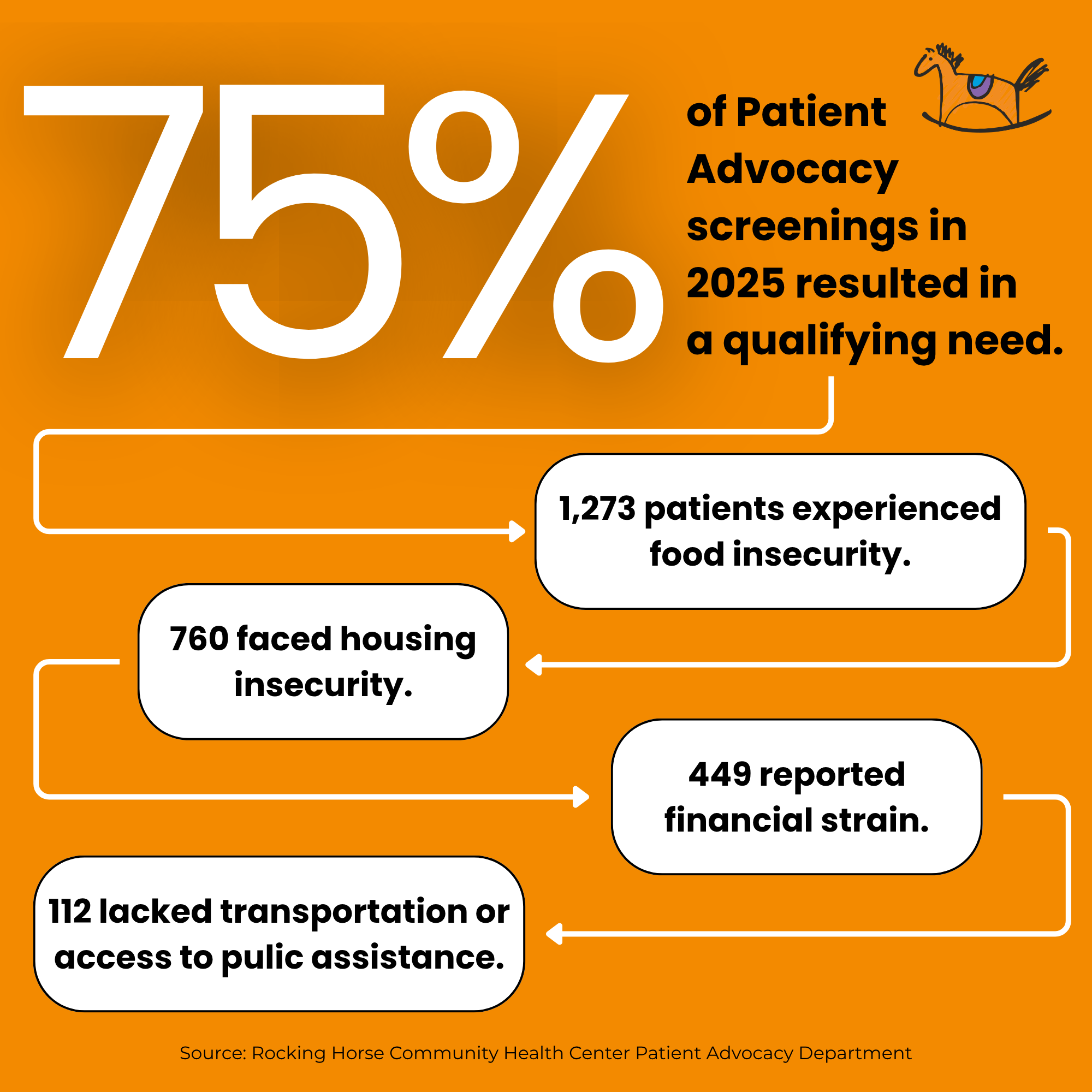
In 2025 alone, we completed 6,724 screenings, with 5,012 resulting in positive needs identified.
Of those:
- 1,273 patients experienced food insecurity
- 760 faced housing insecurity
- 449 reported financial strain
- 112 lacked transportation or access to public assistance
These numbers highlight just how significant non-medical factors are in impacting health. Patient Advocates play a key role in helping to remove these barriers so patients can better focus on their overall well-being and care.
Can you walk us through how a Patient Advocate might support someone from their first appointment through ongoing care?
De'Ja: To ensure we are able to address patient needs early on, Patient Access Representatives and Clinical Assistants provide patients with an Opportunity Assessment. This assessment is completed by the patient and includes questions that help identify social determinants of health. Once the assessment is completed, referrals are made to Patient Advocacy.
Medical staff can also call the Patient Advocacy extension if there is an immediate need, and a Patient Advocate can come meet with the patient in real time. Additionally, all completed assessments are reviewed by Patient Advocacy, and we follow up directly with patients to address any identified needs.
From there, Patient Advocates work alongside the patient to connect them to resources, coordinate additional support, and, if needed, assist with scheduling follow-up appointments with the clinical team and/or with Patient Advocacy. Support is ongoing and tailored based on each level of the patient’s needs.

Many people don’t realize services like this exist. When should a patient consider reaching out to a Patient Advocate?
De'Ja: A patient can reach out to Patient Advocacy at any point. Whether they are experiencing a new challenge or need additional support during their care, we are here to help. Most of the time, when a patient calls with a need, our staff will direct them to Patient Advocacy to ensure they receive the appropriate support.
How do Patient Advocates help ensure patients feel heard, respected, and empowered in their healthcare decisions?
De'Ja: We believe that the patient is the expert of their own story. Patient Advocacy provides client-centered support, recognizing that no two situations are the same. We take time to listen, understand each patient’s unique needs, and use motivational conversations to support and empower them in addressing those needs.
Our goal is to make sure patients feel heard, respected, and confident in the decisions they make about their health.
Without sharing private information, can you share an example of how Patient Advocacy made a meaningful difference for a patient or family?
De'Ja: We supported a young mother of four who was experiencing homelessness while fleeing a domestic violence situation. After completing an assessment, Patient Advocacy was able to connect with her and provide ongoing support during multiple transitions in her housing situation. Through consistent follow-up, resource coordination, and support, she was able to secure stable housing. This is a powerful example of how addressing both immediate and long-term needs can truly change a patient’s situation.
What would you want every patient at Rocking Horse to know about the support that is available to them through Patient Advocacy services?
De'Ja: No matter what your background and no matter what challenges you may be facing, Patient Advocacy is here to support you. Even when something may feel impossible to overcome, with guidance, patience, and the right resources, we will do our best to help you get the support you need to achieve your best possible health and well-being.
No one should have to navigate their healthcare journey alone. If you or someone you know could benefit from extra support, guidance, or resources, reach out to Rocking Horse’s Patient Advocacy team today. The help you need might be closer than you think.